Lifetime Achievement Award
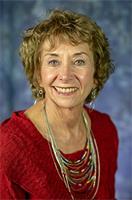
Linda K. Treviño
Distinguished Professor of Organizational Behavior and Ethics, Pennsylvania State University Smeal College of Business
Linda K. Treviño, Distinguished Professor of Organizational Behavior and Ethics at the Pennsylvania State University Smeal College of Business, has earned the Lifetime Achievement Award for four decades of foundational contributions to the study of ethical and unethical conduct in organizations. As her nominators note, "if there was a Mount Rushmore of organizational behavior ethics scholars, Linda's face would be etched in the center of it." She is widely regarded as the foundational figure, and arguably the actual founder, of the behavioral ethics literature, an accolade earned by fighting an early tide of skepticism. Early in her career, she was advised that she would "never get tenure doing that 'ethics stuff'" and that ethics belonged to philosophy, not OB. She persevered, building a rigorous body of scholarship that fundamentally reshaped how organizational scholars understand ethical behavior and helped legitimize ethics as a core domain within OB.
Beginning with her landmark 1986 model of ethical decision making in organizations, which ignited scholarly attention to the relevance of ethics and has garnered over 5,700 citations, Professor Treviño built a research program spanning more than 100 peer-reviewed articles in premier journals. Her thought leadership has created entire sub-disciplines, establishing literatures on ethical culture and structures, accountability and punishment systems, the social context of (un)ethical behavior, moral disengagement, and ethical voice. Described as a methodological "jack of all trades," she has matched her methods to her research goals, moving seamlessly from grounded theory-building and qualitative interviews to large-scale field surveys and experimental designs to produce durable, replicable findings.
Beyond her scholarship, her co-authored textbook, Managing Business Ethics, now in its eighth edition, has trained generations of students and practitioners to treat ethics as a managerial challenge. Her impact extends deeply into the OB community through her dedication to relationships and mentorship. She co-launched a Professional Development Workshop on Behavioral Ethics that is now in its tenth year, consistently attracting hundreds of participants and nurturing the next generation of scholars. Elected an Academy of Management Fellow in 2007, she has served the Academy extensively as Program Chair, Division Chair, Ombudsman, and Associate Editor of AMR. Her citation record places her in the top 10 of organizational behavior researchers worldwide, reflecting the extraordinary reach of a scholar who has reshaped both academic inquiry and organizational practice around integrity.
Early- to Mid-Career Scholarly Achievement Award

Michael D. Baer
Dean's Council Distinguished Professor, Arizona State University W. P. Carey School of Business
Michael D. Baer, Dean's Council Distinguished Professor at Arizona State University's W. P. Carey School of Business, receives the Early- to Mid-Career Scholarly Achievement Award for a rapidly growing body of scholarship and service that, as his nominators emphasize, "Mike represents the kind of star scholar I hope we want to spotlight: someone who lifts others, advances OB with unwavering standards, and leads with principle and generous citizenship. He has exemplified the OB Division's mission in distinctive, enduring ways that deeply align with what our field aspires to be." His record reflects the highest standards of scientific quality: careful theory, methodological soundness, and a commitment to building knowledge that is robust and cumulative. Rather than chasing novelty, his work clarifies and advances understanding of core OB phenomena in ways other scholars can confidently build on.
Since completing his PhD in 2015, Professor Baer has published a remarkable stream of research, including 23 articles in consensus top-tier OB outlets, that has fundamentally "changed the conversation" in the trust and justice literatures. His research pushes the field toward a more psychologically and organizationally realistic model of trust dynamics, challenging the assumption that feeling trusted is uniformly positive. Instead, he has shown it can be a double-edged sword, simultaneously increasing pride and performance while also creating pressure, workload, and reputation concerns that can elevate burnout. He extended this by demonstrating the misalignment costs of trust desired versus trust received. In the fairness domain, his work has counterintuitively revealed that "talking it out" about supervisor unfairness can actually damage relationships and impede emotional recovery.
Just as important, his rigor extends to the way he approaches the scientific enterprise itself. As Editor-in-Chief of Organizational Behavior and Human Decision Processes, he has strengthened the review process, recruiting a diverse and high-caliber team of associate editors, shepherding the journal's adoption of Level 2 Transparency and Openness Promotion (TOP) guidelines, and increasing submissions by roughly 50%. Beyond his editorial leadership, he is a consummate citizen of the OB Division who "builds the people and social infrastructure that enable our science." He repeatedly volunteers for divisional service, mentoring doctoral students who coauthor a striking share of his top-tier work and guides them toward top-tier placements. As one nominator observed, "he is the person who shows up, especially when the work is invisible, time-consuming, and designed to serve others instead of his own record."
Mentorship Award
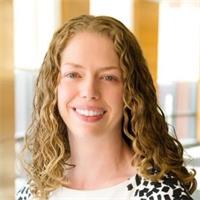
Katherine L. Milkman
James G. Dinan Professor, The Wharton School, University of Pennsylvania
Katherine L. Milkman, James G. Dinan Professor at The Wharton School of the University of Pennsylvania, receives the Mentorship Award for her exceptional dedication to developing the next generation of behavioral scientists through intellectual, social, and personal support. Her nominators, past and current mentees alike, are unequivocal: "I attribute all of my success in academia to Katy," and she makes academia "a smarter and kinder place."
Professor Milkman's intellectual mentorship fundamentally transforms how her students approach research. She meets mentees where they are, even those transitioning from entirely different disciplines, and builds their knowledge from the ground up. She instills a research philosophy focused on impactful questions with meaningful policy implications, ensuring every single one of her PhD students conducts large-scale, preregistered field experiments in real-world organizational settings. Her hands-on guidance is extraordinary: she provides detailed, line-by-line feedback on countless drafts (sometimes providing hundreds of comments on a single manuscript) and teaches often-neglected tacit skills, from how to pitch an idea to an organization to how to provide constructive peer reviews. Her training is so holistic and thorough that it is no surprise her mentees frequently go on to serve as editors and editorial board members at top journals like AMJ, Organization Science, and OBHDP.
Socially, she is exceptionally generous with her professional capital. She connects mentees with leading scholars and industry partners, advocates for them tirelessly on the job market (personally reaching out to dozens of colleagues), and ensures their contributions receive ample credit. Every single PhD student she has mentored has secured a top tenure-track position in OB or related departments.
Personally, despite a demanding schedule that includes directing the Behavior Change for Good Initiative, hosting a podcast, and teaching, she makes each mentee feel they have her full attention. She is renowned for her extraordinary responsiveness and genuine care, whether helping a student navigate imposter syndrome, offering strategic advice during personal crises, or stepping in to handle project logistics while a student is on paternity leave. She lives by her own principle: "Being an advisor is a lifetime job," remaining just as engaged and supportive long after her students graduate.
Societal Impact Award

Dolly Chugh
Professor, New York University Stern School of Business
Dolly Chugh, Professor at the New York University Stern School of Business, receives the Societal Impact Award for a body of work on "bounded ethicality" that has fundamentally changed how organizations, leaders, and individuals understand bias, ethics, and the gap between intentions and actions. Her work tackles one of the defining societal challenges of our time: the persistent effects of bias in organizations and institutions. Crucially, her research does not treat these issues as abstract; it offers structural solutions and actionable tools that individuals and organizations can adopt at scale.
Professor Chugh's societal impact is anchored in rigorous, field-defining scholarship recognized by major awards, including the Academy of Management Journal Best Paper Award in 2020. However, her most distinctive contribution is her unparalleled ability to translate this OB research into evidence-backed guidance that resonates with broad audiences without sacrificing nuance or generating defensiveness. Her TED Talk, "How to Let Go of Being a 'Good' Person — and Become a Better Person," was included in TED's Top 25 of 2018; its concepts have been institutionalized in required implicit-bias training for large government agencies like the NYS Education Department.
Her books, The Person You Mean to Be (which has sold over 75,000 copies) and A More Just Future, have become go-to resources for leaders serious about diversity, equity, and inclusion. Their impact is measurable in their adoption: they are integrated into curricula and programming at over 80 colleges and universities (from business and law schools to medical schools), used by 400+ faculty across K-12 school districts, and featured in training modules and book clubs at major organizations including IBM, Colgate-Palmolive, JP Morgan, and the U.S. Department of Labor. She sustains this science-to-practice translation through her "Dear Good People" newsletter, which reaches nearly 10,000 subscribers and is even assigned as course material at multiple universities.
Beyond her public reach, she profoundly impacts the OB community by expanding its capacity for societal impact. She strengthens the scholarly community, particularly early-career women and scholars of color, through initiatives like the Women of Organizational Behavior (WOB) network, where she fostered virtual writing retreats and support structures during the pandemic. A remarkably generous colleague and dedicated OB Division citizen, Professor Chugh exemplifies how rigorous scholarship can be translated into actionable guidance that reshapes how people and organizations pursue equity and ethical growth at every level of society.